The Valencia coast stands as one of Europe's most compelling yet wonderfully under-the-radar sailing destinations. While the Balearic Islands and the Costa Brava attract the lion's share of international sailing traffic, the coastline stretching from Denia in the north to Cullera in the south offers a remarkable diversity of experiences that seasoned sailors consistently rank among the finest in the western Mediterranean. With over 300 days of sunshine each year, reliable thermal winds, and a coastline that alternates between dramatic limestone cliffs, secluded turquoise coves, and expansive sandy beaches, Valencia delivers a sailing experience that rivals far more famous destinations at a fraction of the cost and congestion.
Whether you are planning your first bareboat charter or you have thousands of nautical miles under your keel, this guide will walk you through everything you need to know to get the most out of sailing the Valencia coast. From the best marinas for provisioning and overnight stays to hidden anchorages that only local skippers know about, we have distilled years of local knowledge into a single comprehensive resource.
The Valencia Coast Overview: Geography, Climate & Distances
The Comunidad Valenciana coastline stretches roughly 500 kilometres from the border with Catalonia in the north to the Murcia region in the south. For sailing purposes, the most rewarding stretch runs approximately 130 nautical miles from Denia to Valencia city, encompassing the Costa Blanca's northern reaches and the Gulf of Valencia. This corridor packs an extraordinary variety of coastal landscapes into a relatively compact cruising ground.
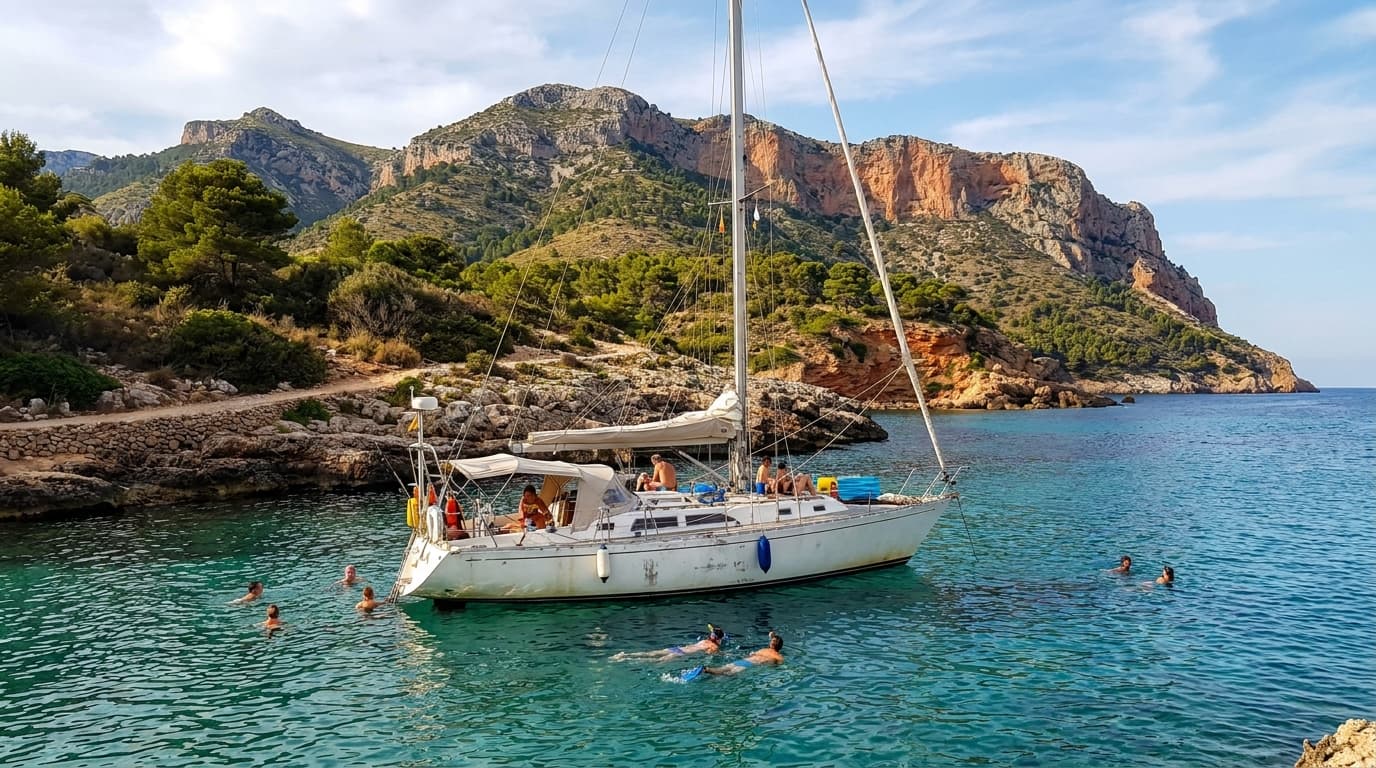
The northern section, from Denia to the Cap de la Nau, is defined by the Betic mountain range plunging directly into the sea. Here you find the most dramatic scenery: towering limestone cliffs, sea caves accessible only by boat, and crystalline coves sheltered by pine-covered headlands. The water clarity in this zone regularly exceeds 25 metres of visibility, rivalling the best snorkelling destinations anywhere in the Mediterranean.
South of the Cap de la Nau, the coastline gradually transitions to the wider, sandier beaches of the Gulf of Valencia. The continental shelf extends further from shore, the waters become shallower and warmer, and the landscape opens up into the rice paddies and wetlands of the Albufera Natural Park. This contrast between the wild, cliff-bound north and the gentle, agricultural south is one of the great pleasures of a multi-day cruise along this coast.
Climate-wise, Valencia is blessed with a classic Mediterranean weather pattern. Summers are hot and dry, with air temperatures typically between 28 and 34 degrees Celsius from June through September. Sea temperatures peak at around 26 degrees in August, making swimming and snorkelling comfortable from May through October. Rainfall is rare during summer months, though the region can experience sudden autumn storms known as the gota fria, or cold drop, typically in September and October. Annual precipitation is low, averaging just 450 millimetres, and the majority falls in concentrated bursts rather than prolonged drizzle.
Best Marinas Along the Valencia Coast
The Valencia coast is well-served by a network of modern marinas, each with its own character and advantages. Here are the key ports of call for any coastal cruise.
Marina Real Juan Carlos I — Our Home Base
Built for the 2007 America's Cup and extensively modernised since, Marina Real Juan Carlos I is the largest and most well-equipped marina on the Valencia coast. Located at the heart of the city's revitalised waterfront, it offers 850 berths for vessels up to 150 metres, full fuel and pump-out services, 24-hour security, and direct access to Valencia's vibrant restaurant and nightlife scene. For charter guests, this is the ideal starting point: you can provision at the nearby Mercado Central, one of Europe's largest and most beautiful covered markets, and be underway toward the northern coves within an hour of departure.
The marina sits in a well-protected artificial harbour with minimal swell in all but the most severe easterly storms. Approach is straightforward from any direction, with the distinctive Veles e Vents building serving as an unmistakable landmark. VHF Channel 9 for port operations. Depth throughout the marina is 4 to 6 metres.
Real Club Nautico de Valencia
Adjacent to the commercial port and slightly south of Marina Real, the Real Club Nautico is Valencia's oldest yacht club, founded in 1903. It offers a more traditional atmosphere with excellent dining facilities and a strong local sailing community. The club welcomes visiting yachts and maintains approximately 400 berths. While the facilities are slightly more modest than Marina Real, the location offers easy access to the Malvarrosa beach promenade and the Las Arenas restaurant district, famous for its authentic paella.
Port Saplaya — Valencia's Little Venice
Just 5 nautical miles north of Valencia, Port Saplaya is one of the coast's hidden gems. This compact residential marina is surrounded by colourful Mediterranean townhouses lining narrow canals, earning it the nickname "Little Venice." The 340-berth marina is ideal for an overnight stop: quiet, well-sheltered, and with several excellent waterfront restaurants serving fresh seafood. The approach requires attention to a narrow entrance channel, but depths inside are a comfortable 2.5 to 4 metres.
Pobla de Farnals Marina
Continuing north, Pobla de Farnals offers 467 berths in a modern marina with good facilities including a travel lift, chandlery, and several boat repair services. The town itself is a pleasant, unhurried Spanish coastal village with a long sandy beach. This marina works well as a staging point before or after the longer passage north to Denia, approximately 60 nautical miles away.
El Perello Marina
South of Valencia, El Perello sits at the edge of the Albufera Natural Park, offering a completely different atmosphere. This small fishing harbour has limited visitor berths but provides access to one of Spain's most important wetland ecosystems. If you can secure a berth, it is worth spending an afternoon exploring the Albufera lagoon by tender, watching flamingos and herons against a backdrop of endless rice paddies. The local restaurants here serve what many consider the most authentic paella in the entire region, cooked over orange wood fires using rice grown just metres from the kitchen.
Top 10 Anchorages & Hidden Coves
The true magic of the Valencia coast reveals itself once you drop the hook in one of its many sheltered anchorages. These are places that road-bound tourists simply cannot reach, and the experience of having a pristine Mediterranean cove to yourself is worth every nautical mile of the journey.
1. Cala de la Granadella (Javea)
Consistently voted one of Spain's finest beaches, Granadella is a 200-metre pebble cove framed by dramatic cliffs covered in Aleppo pines. The water is an almost unreal shade of turquoise, and the underwater landscape of rocky outcrops and posidonia meadows makes it exceptional for snorkelling. Anchor in 6 to 10 metres over sand and rock on the eastern side of the bay. The cove is well-protected from west and northwest winds but open to the east, so check the forecast before settling in for the night. A small beach bar operates during summer months. Distance from Valencia: approximately 55 nautical miles.
2. Cala Moraig (Benitatxell)
One of the most dramatic anchorages on the entire coast, Cala Moraig sits at the base of soaring 100-metre cliffs. The cove features a remarkable geological feature: the Cova dels Arcs, a partially submerged sea cave that you can swim or dinghy into at calm conditions. The water here is extraordinarily clear, with visibility regularly exceeding 30 metres. Anchor in 8 to 12 metres in the centre of the bay, being careful of rocky patches near the cliffs. This is a fair-weather anchorage only; any significant swell from the east or northeast makes it untenable. Distance from Valencia: approximately 58 nautical miles.
3. Cala Barraca (Xabia)
Also known as Portitxol to locals, Cala Barraca is a sheltered cove with some of the calmest, clearest water on the coast. The bay faces south and is well-protected by rocky headlands on both sides, making it one of the more reliable overnight anchorages in the area. The seabed is a mix of sand and posidonia, providing good holding in 5 to 8 metres. Several small beach restaurants serve grilled fish and cold drinks throughout the summer season. The cove is popular with local boats on weekends but midweek it can be blissfully quiet. Distance from Valencia: approximately 52 nautical miles.
4. L'Almadrava Beach (Denia)
On the northern stretch of the coast, L'Almadrava offers a completely different character: a long, gently curving sandy beach backed by low dunes and Mediterranean scrubland. The water is shallow and warm, making it ideal for families with children. Anchor in 3 to 5 metres over clean sand, keeping a respectful distance from the designated swimming area marked by yellow buoys. The town of Denia, with its castle, harbour, and excellent restaurants, is a short dinghy ride to the north. Distance from Valencia: approximately 60 nautical miles.
5. Cala Ambolo (Javea)
Known locally as a cliff-jumping spot, Cala Ambolo is a narrow, dramatic cove flanked by vertical limestone walls. Access by land requires a steep scramble down a cliff path, which means arriving by boat gives you a significant advantage. The water is deep and crystal clear, shading from pale emerald near the pebble beach to deep sapphire further out. Anchor in 8 to 14 metres outside the cove mouth and dinghy in, as the cove itself is too narrow and rocky for safe anchoring. This is a daytime-only stop, best enjoyed on calm summer mornings before the afternoon thermal wind builds. Distance from Valencia: approximately 54 nautical miles.
6. Playa de Portitxol (Javea)
Not to be confused with Cala Barraca (which locals also call Portitxol), Playa de Portitxol is a secluded pebble beach on the eastern face of the Cap de Sant Antoni headland. It is only accessible by sea, which guarantees a sense of genuine remoteness. The rocky seabed provides excellent snorkelling territory, with groupers, octopus, and colourful wrasse easily spotted in the boulder fields just offshore. Anchor in 6 to 10 metres over rock and sand. No facilities whatsoever. Bring everything you need. Distance from Valencia: approximately 56 nautical miles.
7. Cala del Moraig Underwater Cave
Returning to the Moraig area, the underwater cave system known as the Cova dels Arcs is a destination in its own right for experienced snorkellers and divers. The cave entrance begins at sea level and extends back approximately 150 metres through a series of chambers with haunting blue light filtering through from multiple openings. Snorkellers can explore the first chamber safely; the deeper sections require proper cave diving certification. Anchor nearby at Cala Moraig and swim or dinghy to the cave entrance on the western side of the cove. Distance from Valencia: approximately 58 nautical miles.
8. Cullera Beaches
Much closer to Valencia, the beaches around Cullera offer convenient day-trip anchorages for those who do not want to make the longer passage north. The Faro de Cullera (lighthouse) marks a scenic headland with several small rocky coves on its northern face. The main beach is a sweeping arc of golden sand stretching several kilometres to the south, with the distinctive castle of Cullera perched on the hill above the town. Anchor in 4 to 6 metres over sand. Excellent provisioning available in Cullera town. Distance from Valencia: approximately 18 nautical miles.
9. El Saler Beach
Part of the Albufera Natural Park, El Saler is one of the last truly wild beaches near a major Spanish city. Protected from development by its national park status, this broad sandy beach is backed by pine forests and freshwater lagoons. Anchoring is possible in settled conditions in 3 to 5 metres over sand, though there is no protection from easterly swells. The beach is a haven for birdwatchers, with flamingos, herons, and ospreys regularly seen in the adjacent Albufera lagoon. Distance from Valencia: approximately 6 nautical miles.
10. Tabarca Island
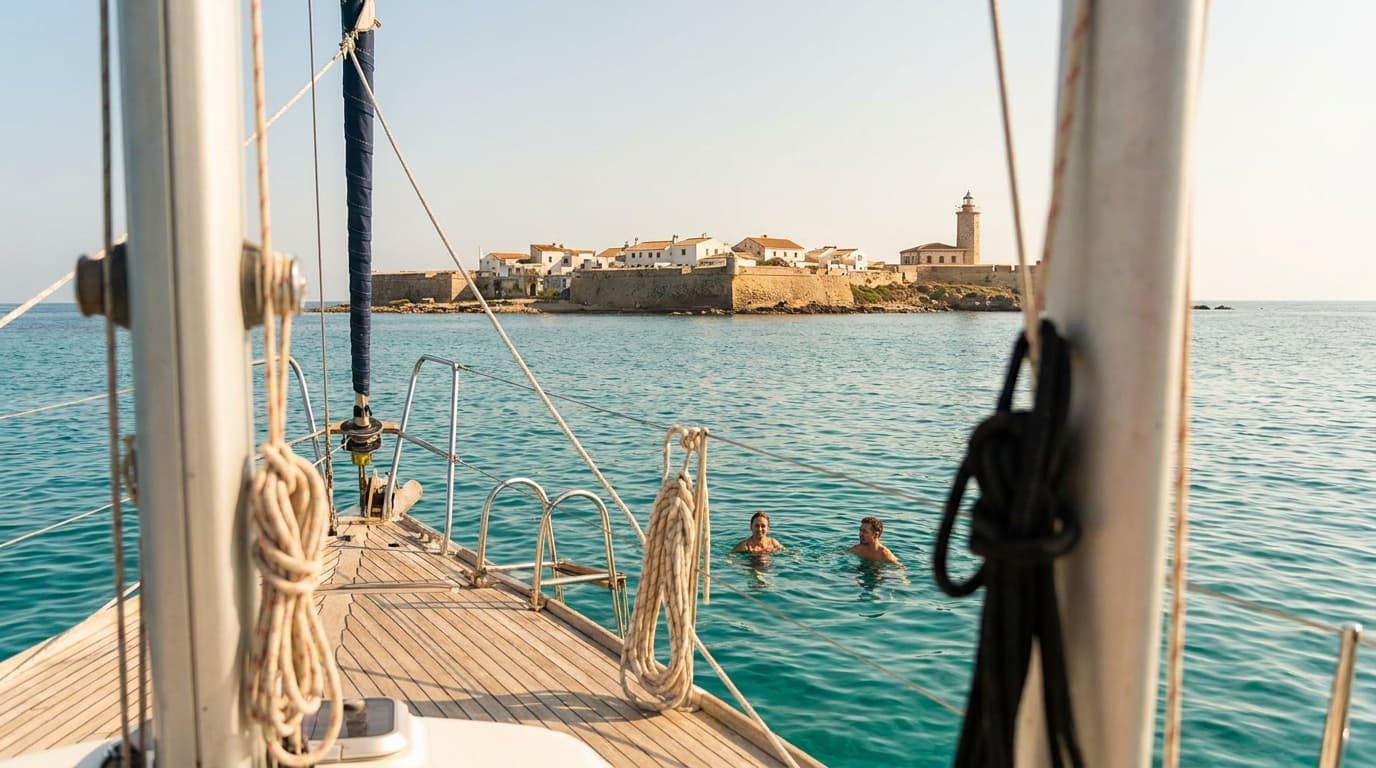
The only permanently inhabited island in the Comunidad Valenciana, Tabarca lies approximately 50 nautical miles south of Valencia, off the coast of Alicante. Despite its modest size (just 1.8 kilometres long and 400 metres at its widest), Tabarca punches far above its weight as a sailing destination. The island is surrounded by a marine reserve with some of the richest underwater biodiversity in the western Mediterranean. Schools of barracuda, moray eels, and enormous groupers patrol the rocky reefs, while posidonia meadows shelter seahorses and cuttlefish.
Anchor on the northern side of the island in 5 to 8 metres over sand, taking care to avoid the posidonia beds which are legally protected. The small village on the island has a handful of restaurants serving outstanding caldero, a rich fish stew that is the island's signature dish. Plan to arrive early in the day, as the anchorage fills up quickly during summer weekends.
Wind & Weather Patterns
Understanding the wind patterns along the Valencia coast is essential for safe and enjoyable sailing. The dominant summer wind is the embat, a thermal sea breeze that builds from the east-southeast each afternoon, typically reaching 10 to 15 knots by mid-afternoon and dying away at sunset. This reliable pattern makes for ideal sailing conditions: calm mornings for motoring or anchoring, building breeze for afternoon sailing, and settled evenings for cocktails in a sheltered cove.
The prevailing synoptic winds are from the west and northwest (Poniente), bringing dry, clear conditions from the interior. During spring and autumn, stronger northwesterly events can reach 25 to 30 knots, though these are usually well-forecast and rarely last more than two or three days. The most significant weather hazard is the Levante, a persistent easterly wind that can build to 20 to 25 knots and generate a significant swell along the north-facing coves. When a Levante is forecast, seek shelter in south-facing anchorages or retreat to the marinas.
The best months for sailing are May through October, with June and September generally offering the ideal combination of warm temperatures, reliable thermal winds, and fewer crowds than the peak summer months of July and August. Water temperature ranges from 16 degrees in February to 26 degrees in August, with comfortable swimming from late May through October.
Navigation Tips
Chart coverage for the Valencia coast is excellent. Both the Spanish Hydrographic Office (IHM) paper charts and digital chart packages from Navionics and C-MAP provide accurate and detailed information. Key charts to have on board include IHM 474 (Denia to Valencia) and IHM 473 (Valencia to Cullera). Always cross-reference electronic charts with visual piloting, as some small rocks and shoals near the cliff-bound northern sections are not always precisely charted.
Local regulations require all vessels to maintain a minimum distance of 200 metres from designated swimming beaches during summer months (June through September). This zone is typically marked by yellow buoys. Speed within port areas is limited to 3 knots, and the general coastal speed limit within half a mile of shore is 5 knots.
The marine reserve around Tabarca Island has specific anchoring restrictions: anchoring on posidonia beds is prohibited and carries significant fines. Use the designated anchoring zones on the island's northern side, where sandy patches between the seagrass provide legal and environmentally responsible holding.
What to Pack for Coastal Sailing
The Valencia coast's reliable summer weather makes packing relatively simple, but a few items deserve special attention. Sun protection is paramount: high-SPF waterproof sunscreen, wide-brimmed hats, and UV-protective clothing are essential. The Mediterranean sun at 39 degrees north is significantly stronger than many northern European sailors expect, particularly when reflected off the water.
Snorkelling gear is non-negotiable. The underwater scenery along the northern coves is simply too spectacular to miss. A quality mask and snorkel, plus fins for stronger swimmers, will transform your experience at anchorages like Granadella and Moraig. If you are a diver, the Javea coast has several excellent dive centres that can arrange guided dives at sites accessible from your yacht.
Despite the generally calm summer conditions, a light waterproof jacket is worth having on board for the occasional afternoon squall or the surprisingly cool wind that can accompany the evening breeze transition. For evenings ashore, Valencia and the coastal towns are relaxed but not scruffy: smart-casual clothing will see you through any restaurant.
Recommended Routes
1-Day Route: Valencia to Cullera and Back
Depart Marina Real in the morning, motor south along the coast to El Saler beach for a mid-morning swim stop. Continue to Cullera (18 nautical miles) for lunch ashore at one of the beachfront restaurants. Return to Valencia in the afternoon, using the building thermal breeze for a pleasant beat back north. Total distance: approximately 36 nautical miles.
3-Day Route: Valencia to Javea
Day 1: Depart Valencia, sail north to Pobla de Farnals or Port Saplaya for a lunch stop, then continue to Denia (60 nautical miles). Overnight in Denia marina. Day 2: Explore the coves of the Cap de la Nau: Granadella, Ambolo, Barraca. Anchor overnight at Cala Barraca. Day 3: Morning snorkelling at Cala Moraig, then sail south back to Valencia, arriving by late afternoon. Total distance: approximately 130 nautical miles.
7-Day Route: The Full Valencia Coast Experience
Day 1: Valencia to Port Saplaya (5 nm), explore the canals and dine. Day 2: Port Saplaya to Denia (55 nm), overnight in marina. Day 3: Denia area exploring: L'Almadrava, Cap de Sant Antoni. Anchor at Cala Barraca. Day 4: Javea coves day: Granadella, Ambolo, Moraig. Overnight at Granadella. Day 5: Passage south to Cullera (70 nm), overnight in port. Day 6: Cullera to El Saler, explore Albufera from the sea. Anchor at El Saler. Day 7: Morning swim at El Saler, gentle sail back to Valencia (6 nm). Total distance: approximately 200 nautical miles.
Set Sail on Your Valencia Adventure
The Valencia coast offers a sailing experience that genuinely has something for everyone: dramatic cliff-bound coves for the adventurous, gentle sandy anchorages for families, world-class marinas for those who prefer shoreside comfort, and some of the finest underwater scenery in the Mediterranean for snorkellers and divers. Add to this Valencia's extraordinary culinary scene, its warm and welcoming local culture, and its consistently excellent weather, and you have a destination that deserves a place on every sailor's bucket list.
Whether you are drawn to a single day on the water or a week-long exploration of the full coastline, we at BoatParty Valencia are here to make it happen. From our base at Marina Real Juan Carlos I, our fleet of modern sailboats, catamarans, and motor yachts is ready to carry you to the hidden corners of this beautiful coast. Our experienced skippers know every cove, every anchorage, and every back-street restaurant worth visiting.
Ready to plan your Valencia sailing adventure? Browse our day trips or contact our team to start planning a bespoke coastal cruise tailored to your perfect sailing holiday.