There is a particular thrill that comes with dropping anchor in a cove that has no road, no car park, and no beach bar with a queue for sunbeds. The Valencia coast is home to dozens of these secret spots — beaches and coves that exist in a kind of parallel universe to the crowded tourist strands, accessible only to those who arrive by sea. These are places where the water is clearer, the sand is cleaner, the silence is deeper, and the sense of discovery is real.
We have spent years exploring every navigable metre of the coastline between Cullera and Denia, and in this guide we present our definitive selection of the ten finest boat-access beaches near Valencia. For each, we provide precise location details, approach information, what makes it special, and practical advice for making the most of your visit. Whether you are chartering a yacht for a full week or booking a day trip from our marina, these beaches will redefine your idea of a Mediterranean beach day.
1. Cala de la Granadella (Javea) — Spain's Best Beach
Granadella holds the extraordinary distinction of having been voted the best beach in all of Spain by multiple travel publications, and it fully deserves the accolade. This 200-metre pebble cove sits at the base of dramatic pine-clad cliffs, surrounded by a protected natural landscape that has been shielded from the development that has scarred so much of the Spanish coast. The water is a shade of turquoise that belongs in a travel brochure from the Caribbean, not the western Mediterranean, and underwater visibility routinely exceeds 20 metres.
Location: 38.7353 N, 0.1589 E — Southern coast of the Cap de la Nau headland, between Javea and Moraira.
Approach by boat: Approach from the south or southeast, keeping clear of the rocky outcrops that extend approximately 50 metres from the eastern cliff face. The cove opens up clearly once you round the headland. Anchor in 6 to 10 metres over sand and scattered rock on the eastern side of the bay. Good holding in sand, poor on rock. A stern line to the rocks can be useful in peak season when space is tight.
What makes it special: The combination of crystal-clear water, dramatic cliff scenery, and exceptional snorkelling makes Granadella a genuine world-class destination. The rocky reefs on both sides of the cove harbour an incredible diversity of marine life including octopus, moray eels, damselfish, and colourful wrasse. The posidonia meadows in slightly deeper water are home to cuttlefish and the occasional seahorse.
Distance from Valencia marina: Approximately 55 nautical miles (5 to 6 hours sailing in typical conditions).
What to bring: Snorkelling gear is essential. The underwater scenery is too good to miss. Bring food and water, although a seasonal beach bar operates from June to September. Reef-safe sunscreen to protect the marine environment.
Best time to visit: Early morning on weekdays from June through September. The cove faces east and catches beautiful morning light. By mid-afternoon in peak season, local boats fill the anchorage.
Difficulty level: Moderate. The passage from Valencia requires either an early departure or an overnight stop en route. The anchorage itself is straightforward in settled conditions.
2. Cala Ambolo (Javea) — The Cliff Jumper's Paradise
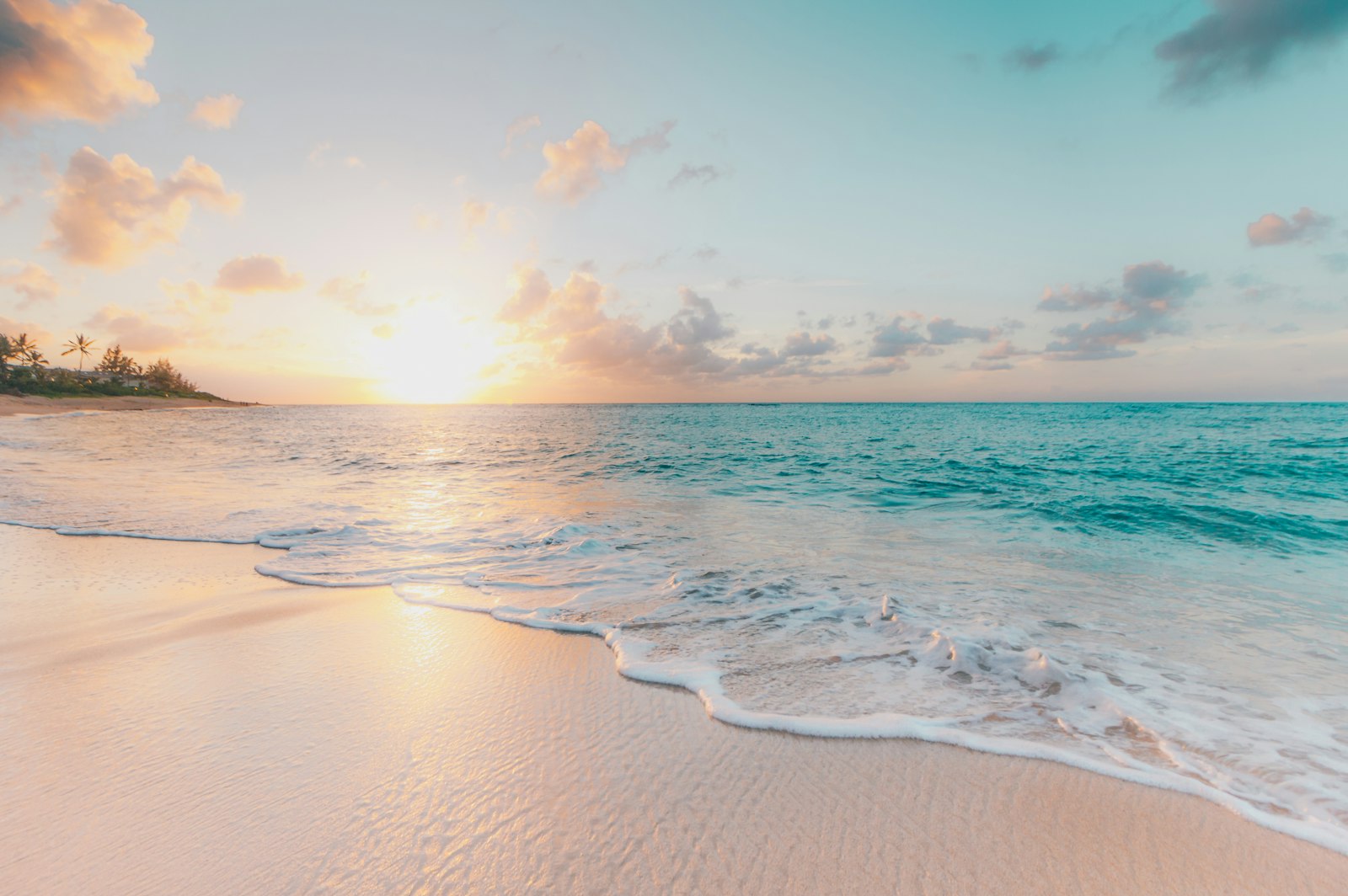
Cala Ambolo is not a beach for the faint-hearted. Wedged between vertical limestone cliffs that rise 30 metres straight from the waterline, this narrow cove has become legendary among local thrill-seekers for its cliff-jumping platforms at various heights. But you do not need to be an adrenaline junkie to appreciate Ambolo: the deep, crystalline water is simply some of the most beautiful on the entire coast, shifting from pale jade near the rocks to profound sapphire in the centre of the bay.
Location: 38.7412 N, 0.1702 E — East-facing cove on the southern flank of Cap de la Nau.
Approach by boat: Approach from the east. The cove entrance is narrow (approximately 40 metres wide) and flanked by submerged rocks, so proceed with caution and good visibility. Do not attempt to anchor inside the cove; the depth drops rapidly and the seabed is mostly rock. Instead, anchor in 10 to 14 metres in the open water just outside the entrance and take the dinghy in.
What makes it special: The sheer vertical walls create an almost cathedral-like atmosphere, with light reflecting between the cliff faces and dancing on the water surface. The depth of the water (8 metres plus even close to shore) means the colour saturation is extraordinary. For swimmers and snorkellers, the base of the cliffs is a maze of small caves, overhangs, and swim-throughs.
Distance from Valencia marina: Approximately 54 nautical miles.
What to bring: Water shoes for the rocky entry points. Underwater camera. Courage if you plan to jump. There are no facilities whatsoever, so bring all food and water.
Best time to visit: Morning, before the afternoon thermal wind builds and creates swell at the cliff base. Weekdays are dramatically quieter than weekends.
Difficulty level: Advanced. The narrow entrance and exposed anchorage require careful piloting and settled weather conditions. Not suitable for overnight anchoring.
3. Cala del Moraig (Benitatxell) — The Underwater Cathedral
Moraig is one of those places that stops you in your tracks. Arriving by boat, you round a headland and suddenly find yourself facing a cove backed by 100-metre cliffs with a partially submerged cave system at water level. The Cova dels Arcs is a natural sea cave that extends back approximately 150 metres through a series of chambers with ghostly blue light filtering through from multiple underwater openings. It is, without exaggeration, one of the most extraordinary natural features on the Spanish Mediterranean coast.
Location: 38.7190 N, 0.1283 E — North-facing cove between Moraira and Javea.
Approach by boat: Approach from the north or northeast. The cove is clearly visible once you pass the Punta de Moraig headland. Anchor in 8 to 12 metres in the centre of the bay over mixed sand and rock. Be wary of scattered boulders on the seabed. The cave entrance is on the western side of the cove, identifiable by a low rocky arch at the waterline.
What makes it special: The cave system is genuinely awe-inspiring. Snorkellers can explore the first chamber, where the ceiling rises to about 3 metres above water level and the light creates surreal blue reflections. The deeper chambers require diving equipment and cave diving certification. Outside the cave, the cliff walls are draped in sea fans and sponges, and the water clarity makes this one of the coast's premier snorkelling locations.
Distance from Valencia marina: Approximately 58 nautical miles.
What to bring: Waterproof torch for the cave. Snorkelling gear. Neoprene shorty if visiting outside July and August, as the cave water can be noticeably cooler.
Best time to visit: Mid-morning when the sun angle illuminates the cave entrance. Calm conditions are essential — any northeast swell makes the cave dangerous to enter.
Difficulty level: Advanced. Fair-weather anchorage only, exposed to the northeast. The cave requires calm conditions and good swimming ability.
4. Cala Barraca (Xabia) — The Calm Turquoise Haven
If Moraig and Ambolo are the coast's dramatic headliners, Cala Barraca is its reliable best friend. This south-facing cove is one of the most sheltered anchorages along the entire stretch, protected on both sides by low rocky headlands that break any residual swell. The result is water of almost lake-like calmness, in a shade of turquoise that seems to glow from within. It is the ideal spot for families, for nervous swimmers, and for anyone who simply wants to float in warm, crystal-clear water without a care in the world.
Location: 38.7498 N, 0.1893 E — South-facing cove on the eastern coast of Cap de la Nau.
Approach by boat: Straightforward approach from the south. The cove is well-marked and easy to identify. Anchor in 5 to 8 metres over sand and posidonia. The posidonia provides excellent holding, and anchoring on it is permitted in this location (unlike certain marine reserve zones). Swing room is generous on weekdays; on summer weekends, the cove fills up and a Mediterranean-style mooring with a stern line to the rocks may be necessary.
What makes it special: The water quality is consistently among the best on the coast. The sheltered aspect means that even when a light breeze is blowing elsewhere, Barraca remains calm. Two small seasonal restaurants on the beach serve simple but excellent grilled fish, cold beer, and Spanish wine. The snorkelling along the rocky edges is rewarding, with plenty of marine life in shallow, warm water.
Distance from Valencia marina: Approximately 52 nautical miles.
What to bring: Snorkelling gear. Cash for the beach restaurants (not all accept cards). A good book for a long, lazy afternoon.
Best time to visit: Any time from May through October. The south-facing aspect means it holds warmth well into the evening. It is one of the few coves on the north coast that is comfortable for overnight anchoring in settled conditions.
Difficulty level: Easy. One of the most accessible and forgiving anchorages on the coast.
5. L'Illa de Tabarca — The Marine Reserve Island
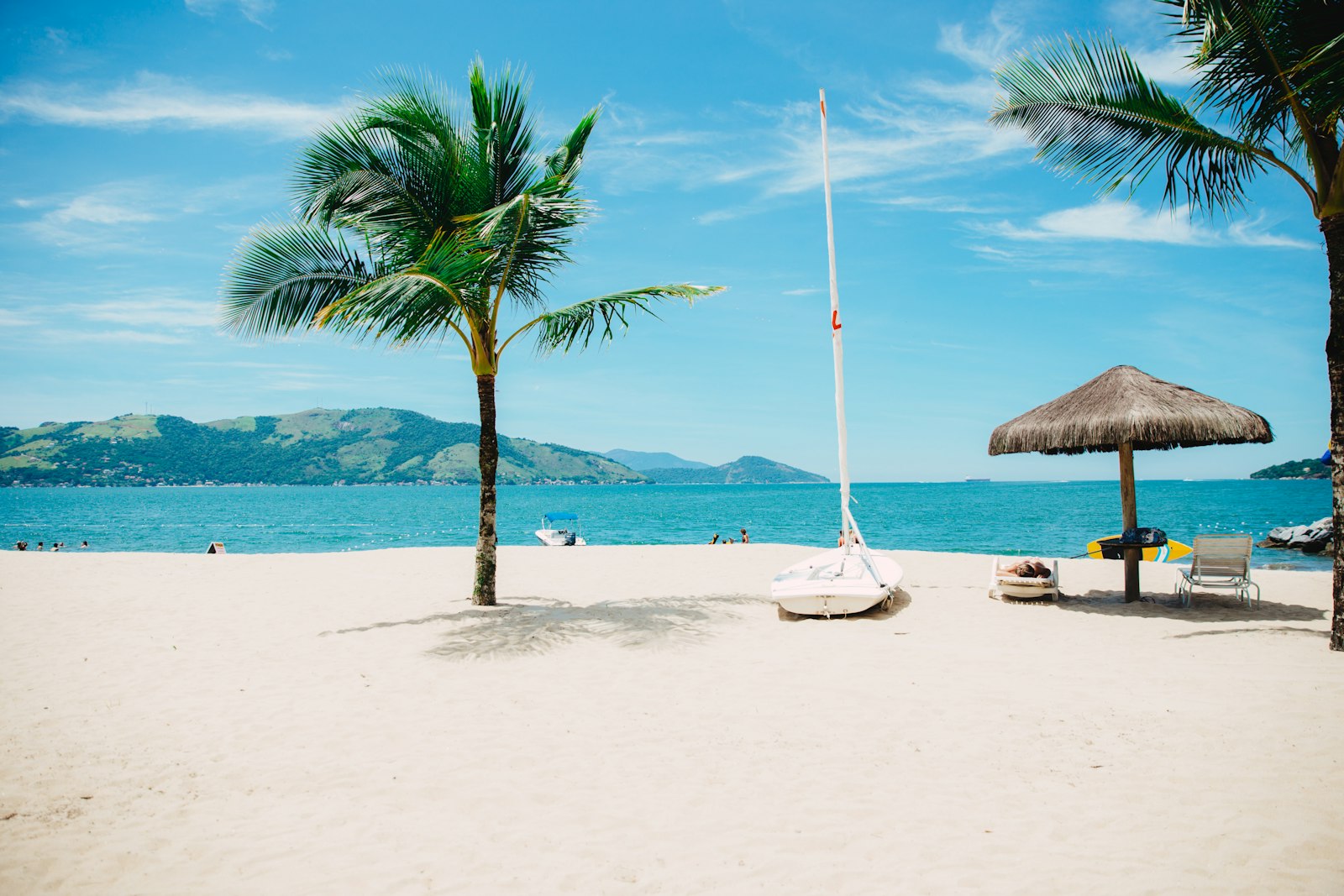
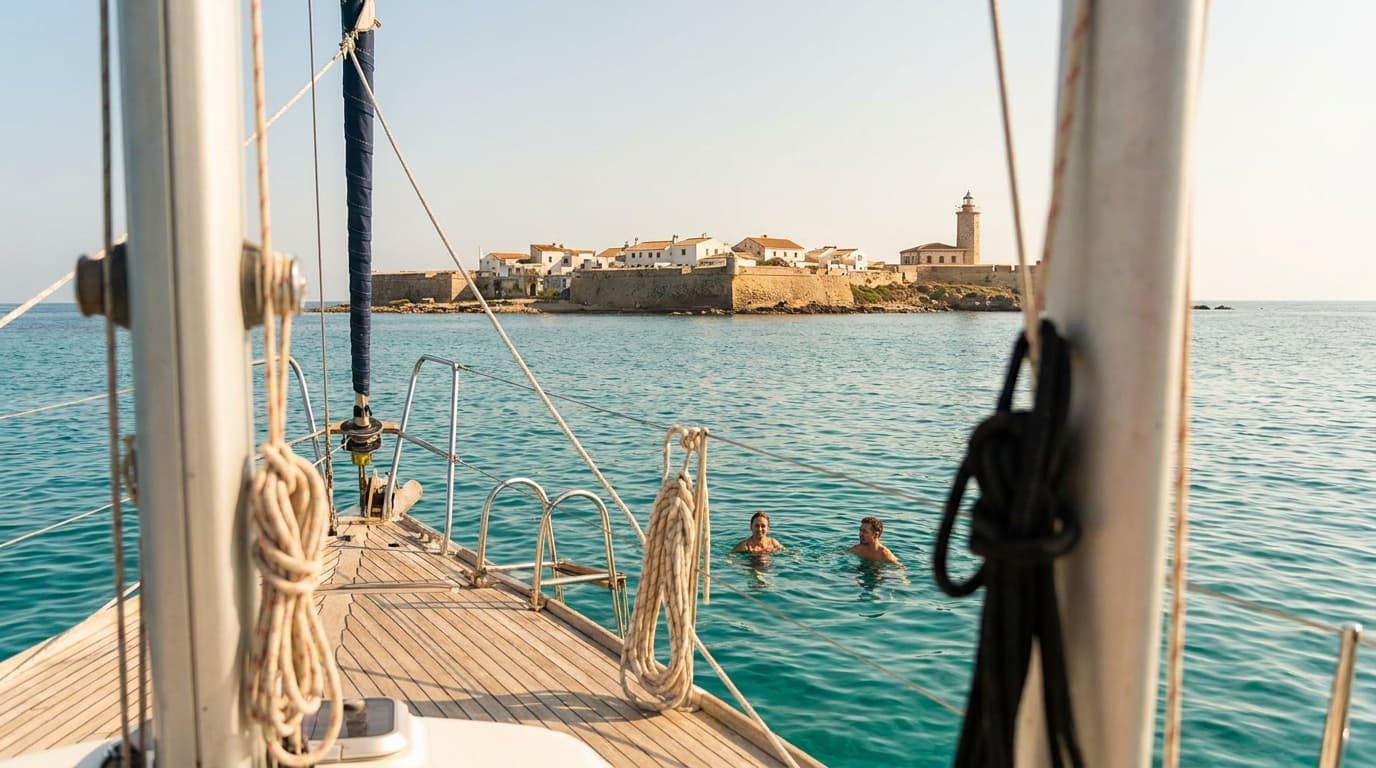
Tabarca is the crown jewel of the Valencia region's maritime heritage. This tiny island, just 1.8 kilometres long and barely 400 metres wide at its broadest point, lies 11 nautical miles off the coast of Alicante (approximately 70 nautical miles south of Valencia). It is the only permanently inhabited island in the Comunidad Valenciana, home to around 50 year-round residents and a small fishing community that has existed here since the 18th century.
Location: 38.1684 N, 0.4783 W — Off the coast of Santa Pola and Alicante.
Approach by boat: Approach from the north or northeast. The island is low-lying and can be difficult to spot from a distance, though it appears clearly on all chart plotters. The main anchorage is on the northern side, between the island and the smaller Isla Cantera. Anchor in 5 to 8 metres over sand, taking extreme care to avoid the posidonia beds which are strictly protected within the marine reserve. Fines for anchoring on posidonia here start at 600 euros.
What makes it special: The marine reserve surrounding Tabarca was the first to be established in Spain (1986) and the results of four decades of protection are spectacular. Snorkelling off the rocky southern shore reveals an underwater world teeming with life: enormous groupers that have lost their fear of humans, schools of barracuda swirling in silver columns, moray eels peering from crevices, and vast meadows of posidonia sheltering cuttlefish and seahorses. Above water, the island's walled village is a charming relic of its history as a resettlement for Genoese fishermen rescued from Tunisian captivity.
Distance from Valencia marina: Approximately 70 nautical miles.
What to bring: Snorkelling gear is absolutely essential. Underwater camera. Cash for the island restaurants. Be aware that supplies on the island are extremely limited outside of the main summer season.
Best time to visit: June or September, when the water is warm but the summer crowds have thinned. In July and August, the anchorage fills up early and the small island can feel overcrowded.
Difficulty level: Moderate. The passage from Valencia is significant (a full day's sail or 5 to 6 hours motoring). The anchorage is generally well-protected but can become uncomfortable in strong easterly winds.
6. Cala Les Rotes (Denia) — Rocky Cove Paradise
The Les Rotes coastline south of Denia is a succession of rocky platforms, tiny pebble coves, and crystal-clear swimming pools carved into the limestone by centuries of wave action. While the main Les Rotes beach is accessible by road, several of the smaller coves along this stretch can only be reached by boat or by scrambling over treacherous rocks. By boat, you can hop from one to the next, sampling the best swimming and snorkelling spots at your leisure.
Location: 38.8350 N, 0.0930 E — South of Denia town along the rocky coastal platform.
Approach by boat: Navigate along the coast about 200 metres offshore, watching for rocky outcrops. The best coves for anchoring are small and intimate. Anchor in 4 to 7 metres over rock and sand. Use a trip line on your anchor to avoid fouling in the rocky seabed.
What makes it special: The natural rock pools create sheltered swimming spots with incredibly clear water. The rock formations are dramatic and photogenic, with warm golden limestone creating a beautiful contrast against the blue water. Excellent snorkelling over the rocky reef systems close to shore.
Distance from Valencia marina: Approximately 62 nautical miles.
What to bring: Water shoes essential for the rocky terrain. Snorkelling gear. Picnic provisions as there are limited facilities in the quieter sections.
Best time to visit: Morning on calm days. The coastline is exposed to easterly winds, so check the forecast carefully.
Difficulty level: Moderate. Rocky seabed requires careful anchoring technique.
7. Playa de Portitxol — Total Seclusion
If absolute solitude is what you seek, Playa de Portitxol delivers. This small pebble beach sits on the northeast face of the Cap de Sant Antoni, completely inaccessible by land without a serious scramble down unstable cliffs. By boat, it is a straightforward approach, and the reward is a cove that you will very likely have entirely to yourself, even in August.
Location: 38.7930 N, 0.1986 E — Northeast face of Cap de Sant Antoni, north of Javea.
Approach by boat: Approach from the north. The beach is visible once you round the Cap de Sant Antoni headland. Anchor in 6 to 10 metres over rock and sand. The seabed drops away steeply, so set your anchor well and ensure good holding before switching off the engine.
What makes it special: Pure isolation. The feeling of having a Mediterranean beach completely to yourself is an increasingly rare luxury. The underwater landscape is wild and unvisited, with large boulder fields sheltering shy groupers and octopus. The backdrop of the Cap de Sant Antoni natural park, with its hawks and wild herbs, adds to the sense of being somewhere genuinely remote.
Distance from Valencia marina: Approximately 56 nautical miles.
What to bring: Everything. There is nothing here. Water, food, sun protection, snorkelling gear, and a sense of adventure.
Best time to visit: Any calm day. The northeast exposure means this spot is best avoided when Levante winds are blowing.
Difficulty level: Moderate to advanced. Exposed to northeast swell with no shelter. Daytime stop only.
8. Cap de Sant Antoni — Nature Park Waters
The waters directly below the Cap de Sant Antoni lighthouse offer some of the most pristine swimming and snorkelling on the coast. The headland, which rises 160 metres above sea level, is a protected natural park, and the underwater environment benefits from the lack of coastal development. Rocky platforms at the base of the cliff create natural swimming pools of breathtaking clarity.
Location: 38.8038 N, 0.1962 E — Base of Cap de Sant Antoni, Javea.
Approach by boat: Approach from the east, keeping well clear of the rocky shoals extending from the headland. There are several small indentations in the cliff base where you can bring a dinghy close to shore. Do not attempt to anchor the main vessel too close to the cliffs; anchor in 10 to 15 metres offshore and dinghy in.
What makes it special: The natural park protection means the marine ecosystem here is notably richer than in unprotected areas. Large schools of fish swirl around the underwater boulders, and the kelp-covered rocks are home to nudibranchs and other colourful invertebrates rarely seen elsewhere on the coast.
Distance from Valencia marina: Approximately 58 nautical miles.
What to bring: Snorkelling gear, underwater camera, dinghy for shore access.
Best time to visit: Morning on calm days with good underwater visibility.
Difficulty level: Advanced. Exposed headland with potential currents and swell. Experienced boat handlers only.
9. Cala del Llebeig (Benitatxell) — The Remote Gem
Tucked between the better-known Moraig and Barraca, Cala del Llebeig is often overlooked by visiting boats heading for more famous neighbours. Their loss is your gain. This narrow, cliff-backed cove is reached by a rugged coastal path on land (45 minutes of scrambling) but is effortlessly accessible by dinghy from an offshore anchorage. The reward is a dramatic pebble beach at the foot of overhanging cliffs, with water so clear you can count individual pebbles on the seabed from six metres above.
Location: 38.7240 N, 0.1380 E — Between Cala Moraig and Cala Barraca.
Approach by boat: The cove is too narrow and shallow for anchoring larger vessels. Anchor offshore in 8 to 12 metres and use the dinghy to reach the beach. The entrance is between two rock pillars and requires careful navigation even by dinghy.
What makes it special: The sense of being in a completely wild place. The cliffs tower above you, sea birds wheel overhead, and the only sounds are waves and wind. Old fishermen's storage caves are carved into the cliff face, remnants of a time when local fishermen used the cove as a base for their small boats. The snorkelling along the base of the cliffs is extraordinary.
Distance from Valencia marina: Approximately 56 nautical miles.
What to bring: Water shoes, snorkelling gear, picnic. Cash is useless here — there are no facilities of any kind.
Best time to visit: Mid-morning to early afternoon on calm days. The cliffs shade the beach from the afternoon sun.
Difficulty level: Advanced. Requires dinghy access and calm conditions.
10. Sea Caves of El Campello — Coastal Cave Network
South of Valencia, the limestone coastline around El Campello hides a network of sea caves that are only accessible by boat. These caves range from shallow grottoes you can swim into to deeper chambers requiring a torch and a sense of adventure. The most impressive is the Cova del Llop Mari (Sea Wolf Cave), a large chamber with a pebble beach inside where you can pull up a dinghy and explore by torchlight.
Location: 38.4280 N, 0.3870 W — Rocky coastline north of El Campello, south of Valencia.
Approach by boat: Navigate along the coast approximately 100 metres offshore, watching for cave entrances at the waterline. The largest caves are clearly visible as dark openings in the cliff face. Anchor offshore in 6 to 10 metres over sand and approach the caves by dinghy or swimming.
What makes it special: Exploring sea caves by boat is an experience that stays with you. The play of light on water inside the caves creates mesmerising patterns on the rock walls. Some caves open into larger chambers with skylights where shafts of sunlight illuminate the turquoise water below. The marine life around the cave entrances is particularly rich, as the caves provide shelter for fish and invertebrates.
Distance from Valencia marina: Approximately 45 nautical miles south.
What to bring: Waterproof torch essential. Snorkelling gear. Dinghy for cave exploration. Helmet recommended for lower caves.
Best time to visit: Morning on calm days when the sea is flat. Any swell makes cave entry dangerous.
Difficulty level: Advanced. Cave exploration requires calm conditions, good judgement, and appropriate safety equipment.
What to Pack for a Beach Boat Trip
A successful day exploring hidden beaches requires some preparation. Here is our recommended packing list, refined through hundreds of beach boat trips along the Valencia coast:
Essentials: High-SPF reef-safe sunscreen, wide-brimmed hat, quality sunglasses with a retention strap, reusable water bottles (at least 2 litres per person), snorkelling mask and fins, waterproof phone case, light towel or sarong.
Food and drink: Prepare a cooler with sandwiches, fruit, cheese, and snacks. Spanish supermarkets stock excellent pre-made tortilla espanola and empanadas that travel well. Frozen water bottles act as ice packs and provide cold drinking water as they melt through the day.
Safety: Basic first aid kit, whistle, waterproof torch, VHF radio on the boat, and ensure someone aboard knows the boat's emergency procedures.
Best Boats for Beach Hopping
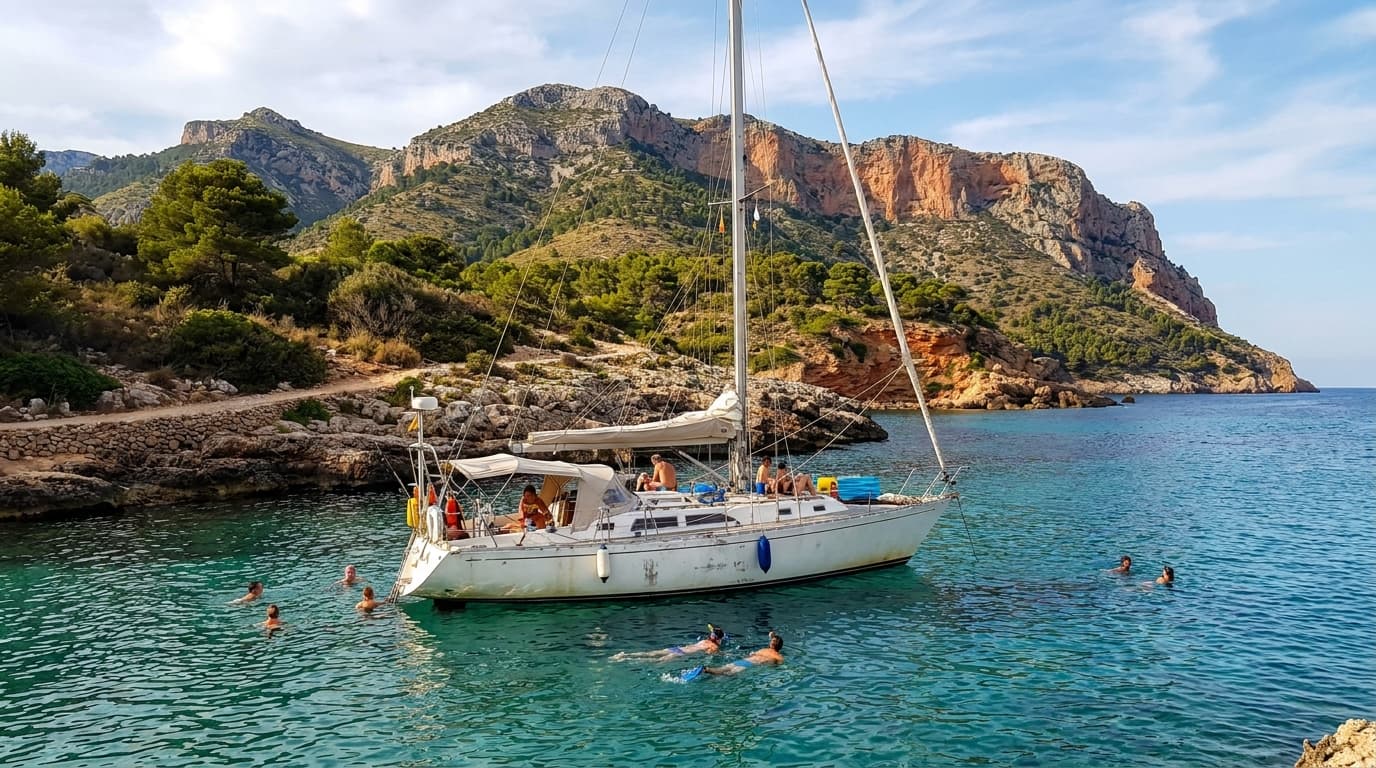
The ideal vessel for exploring hidden beaches depends on your priorities. For reaching the remote northern coves, a sailboat combines the romance of sailing with the ability to anchor in shallow coves. For maximising the number of beaches you visit in a single day, a motorboat provides the speed and manoeuvrability to hop efficiently between coves. For larger groups wanting a combination of comfort and access, a catamaran offers stability at anchor, spacious deck areas for swimming and sunbathing, and shallow enough draft to access most of the coves listed above.
All of our vessels are equipped with dinghies, snorkelling gear, and the local knowledge of our experienced captains, who know every hidden entrance and every secret anchorage along the coast.
When to Go
The hidden beach season runs from May through October, with each month offering a different character. May and June bring warm but not oppressive temperatures, wildflowers on the cliff tops, and uncrowded anchorages. July and August deliver the hottest weather and warmest water, but the most popular coves like Granadella can become congested, particularly at weekends. September is arguably the best month of all: the sea is at its warmest (25 to 26 degrees), the summer crowds have departed, and the light takes on a golden quality that makes every cove look its absolute best. October can still deliver excellent beach days, though the increasing chance of autumn storms means checking the forecast becomes more important.
Book Your Hidden Beach Adventure
Every beach on this list is reachable from our base at Marina Real Juan Carlos I in Valencia. Whether you want to spend a full day exploring the remote coves of the Cap de la Nau or a few hours at the closer beaches near Cullera, we can design the perfect boat trip to match your interests, your experience level, and your sense of adventure. Contact our team to start planning a beach day that you will remember for the rest of your life.